


Animation — Understanding Metastatic Uveal Melanoma
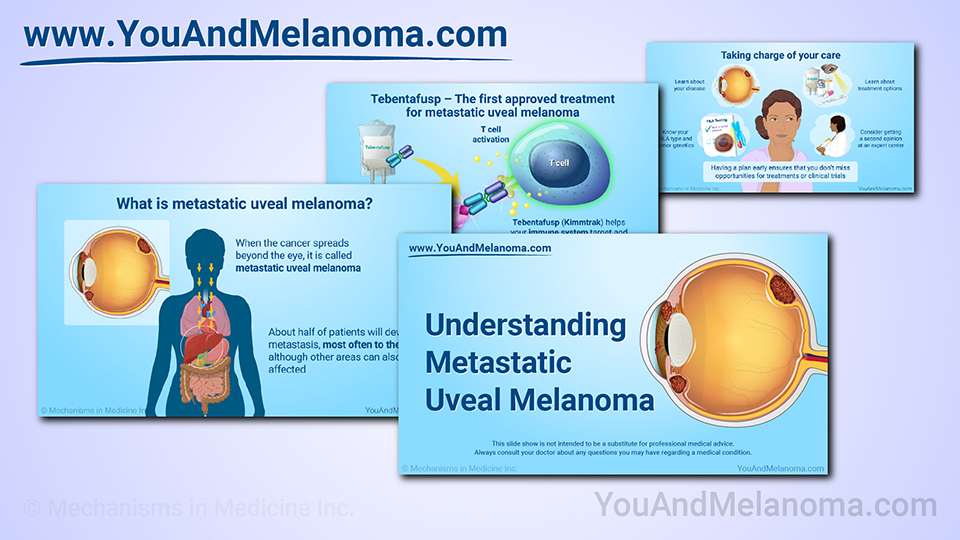
Slide Show — Understanding Metastatic Uveal Melanoma
1.
What is metastatic uveal melanoma?

2.
What risk factors influence whether uveal melanoma will spread (metastasize)?

3.
What is HLA testing, and why is it done for metastatic uveal melanoma?
4.
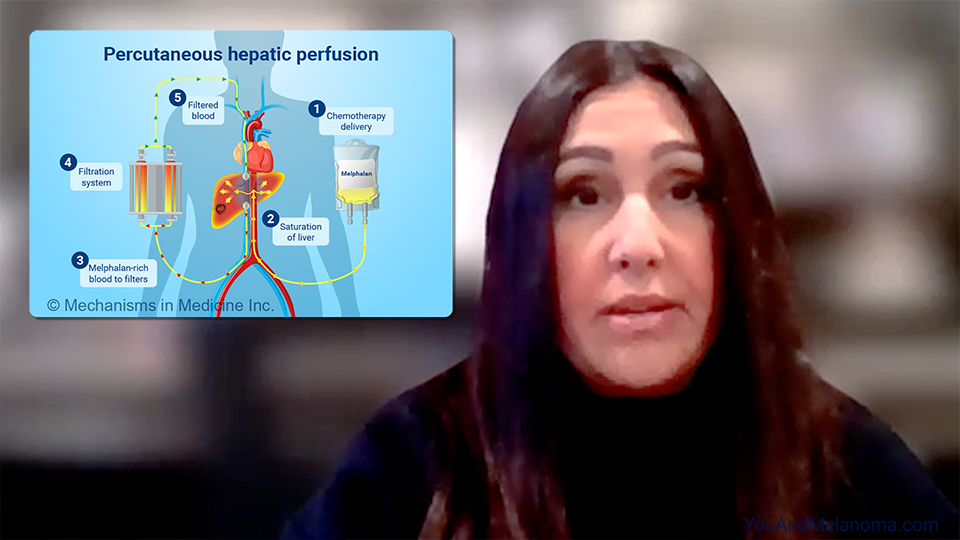
How is metastatic uveal melanoma treated?

5.
Ashley's story: How did you find out you had metastatic uveal melanoma?

6.
Ashley's story: What advice do you have for others on their journey with metastatic uveal melanoma?

7.
Jon's story: How did you find out you had metastatic uveal melanoma?

8.
Jon's story: What advice do you have for others on their journey with metastatic uveal melanoma?
Expert Video — What is metastatic uveal melanoma?
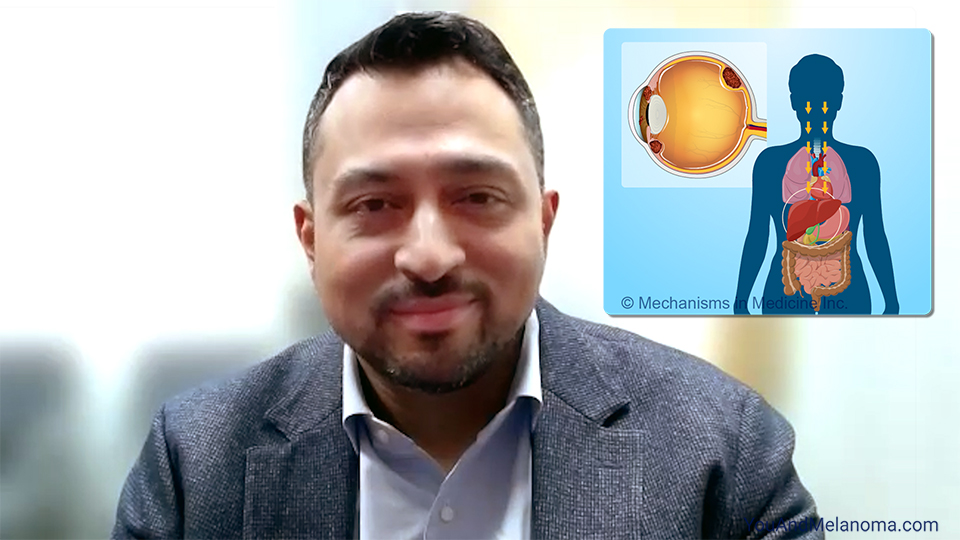
Dr. Shaheer Khan, a medical oncologist at the Northwell Health Cancer Institute in New York City, provides an overview of metastatic uveal melanoma. He explains that uveal melanoma is a rare cancer that develops from cells called melanocytes that are present in the uvea, a layer of the eye that includes the choroid, ciliary body, and iris. Metastatic uveal melanoma means the cancer has spread from the eye to other parts of the body, which occurs in about 40–50% of patients. The liver is the most common site of spread, though it can also involve the lungs, bones, and other areas. Dr. Khan stresses the importance of regular follow-up and ongoing monitoring, even after the original eye tumor has been treated.






Click here to take our SURVEY
Your feedback is important to us! We will use your feedback to develop future areas of content about melanoma which will help other patients, caregivers, and families.
Other Modules:
Animation — Understanding Metastatic Uveal Melanoma
Slide Show — Understanding Metastatic Uveal Melanoma
1.
What is metastatic uveal melanoma?
2.
What risk factors influence whether uveal melanoma will spread (metastasize)?
3.
What is HLA testing, and why is it done for metastatic uveal melanoma?
4.
How is metastatic uveal melanoma treated?
5.
Ashley's story: How did you find out you had metastatic uveal melanoma?
6.
Ashley's story: What advice do you have for others on their journey with metastatic uveal melanoma?
7.
Jon's story: How did you find out you had metastatic uveal melanoma?
8.
Jon's story: What advice do you have for others on their journey with metastatic uveal melanoma?