

Understanding Metastatic Uveal Melanoma
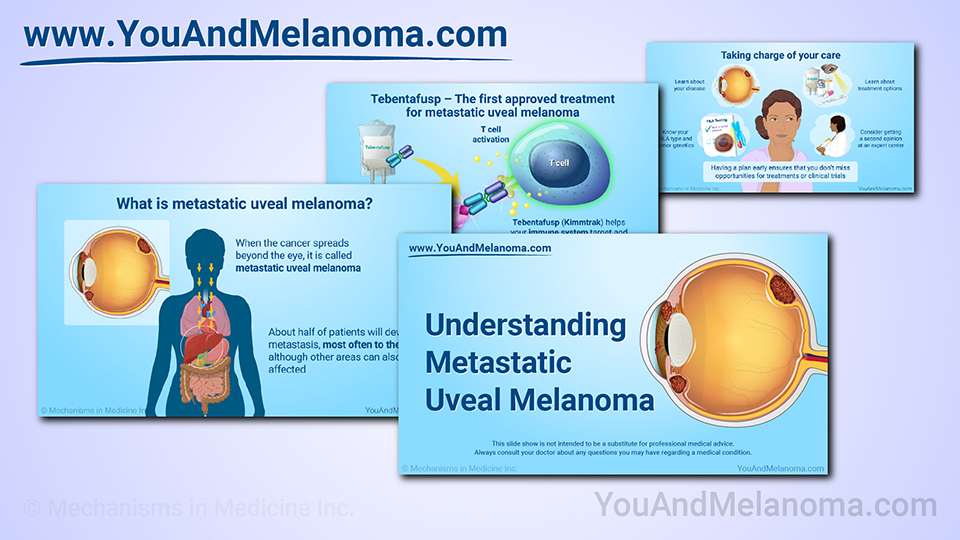
This slide show is not intended to be a substitute for professional medical advice. Always consult your doctor about any questions you may have regarding a medical condition.
What is uveal melanoma?
Uveal melanoma, also referred to as ocular melanoma, is the most common eye cancer in adults, affecting about 2,000 people each year in the United States. It starts in the uvea, a layer of the eye.
What is metastatic uveal melanoma?
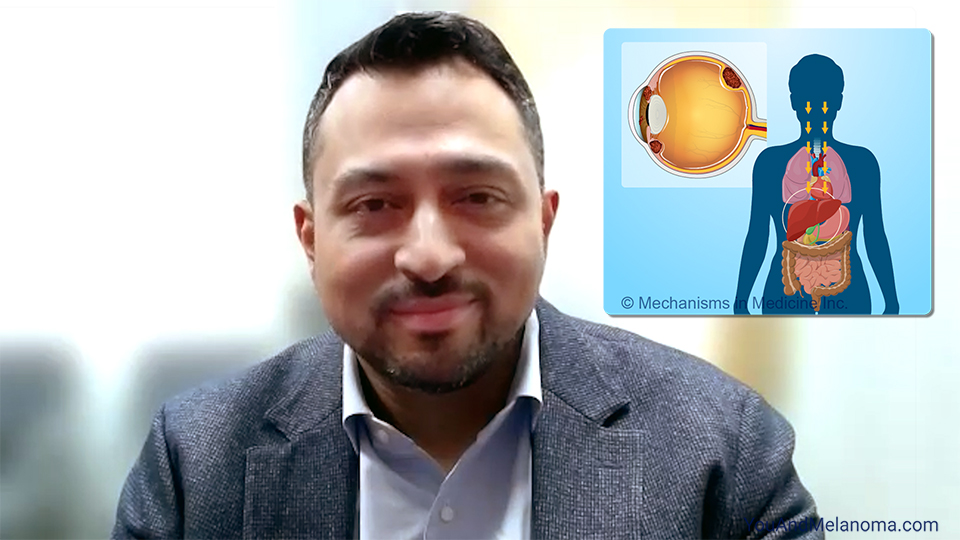
When the cancer spreads beyond the eye, it is called metastatic uveal melanoma. About half of patients will develop metastasis, most often to the liver, although other areas can also be affected.
Understanding your risk of metastatic uveal melanoma
Several factors influence the chances that uveal melanoma will spread, including the tumor size and location within the eye.
Understanding your genetic risk of metastatic uveal melanoma
If a biopsy of your tumor can be performed before treatment, genetic testing of a tumor sample can also help predict risk. Tumors with normal genetic or chromosomal features generally have a lower risk of spreading, while those with certain genetic or chromosomal changes are associated with a higher risk of metastasis. Specific gene mutations in the tumor or other tumor markers can also influence how aggressive the disease may be.
Watching for metastatic uveal melanoma
Surveillance after initial treatment is critical. Regular scans and checkups can help detect metastasis early, when treatment may be more effective.
The frequency of scans depends on your risk and the schedule your doctor thinks is most appropriate.
What therapy is right for you if you have been diagnosed with metastatic uveal melanoma?
If uveal melanoma spreads, treatment options depend on where the cancer has spread and your HLA type (a genetic immune marker).
What therapy is right for you if you have been diagnosed with metastatic uveal melanoma?
Your doctor can determine your HLA type through a blood test. Knowing your HLA type is critical because some treatments, like tebentafusp, are only effective in patients with the HLA-A*02:01 marker.
What therapy is right for you if you have been diagnosed with metastatic uveal melanoma?
Systemic therapies, or whole-body treatment may be recommended. Because uveal melanoma commonly spreads to the liver, treatments focused on the liver, or liver-directed therapy, may also be an option.
Tebentafusp – The first approved treatment for metastatic uveal melanoma
Tebentafusp (Kimmtrak), approved in 2022, is the first drug developed specifically for metastatic uveal melanoma.
It works by helping your immune system target and kill cancer cells but it only works if you have the HLA-A*02:01 marker.
Tebentafusp – The first approved treatment for metastatic uveal melanoma
In clinical trials, tebentafusp significantly improved survival compared to other treatments.
The first three doses are usually given in the hospital with monitoring for side effects. Afterward, treatments are given in the clinic.
Percutaneous hepatic perfusion
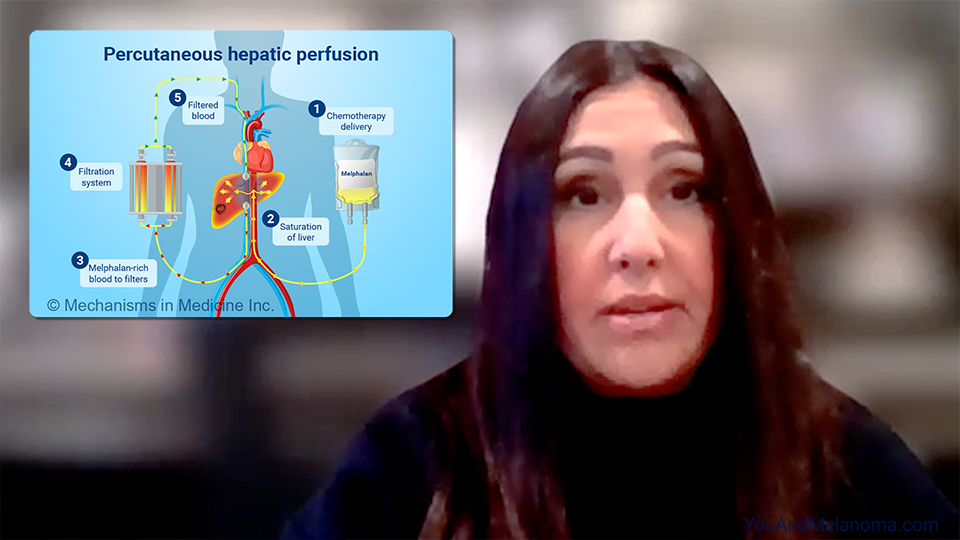
Percutaneous hepatic perfusion (HEPZATO), was FDA-approved in 2023. In this approach, doctors deliver chemotherapy (melphalan) directly into the liver, then filter the blood before returning it to the body, using catheters placed in the arteries and veins of the neck and groin.
This treatment is performed in a hospital setting, under general anesthesia, and may require overnight stay in the hospital. This method has shown encouraging results for patients whose tumors are mostly located in the liver.
More treatment options
Outside of these two treatments that are FDA-approved specifically for metastatic uveal melanoma, there are a number of other possible treatments including other forms of liver-directed therapy, immunotherapies, and clinical trials that are commonly used.
Ask your doctor what clinical trials or new treatments might be right for you.3,4
Current and upcoming clinical trials
Clinical trials offer access to promising new drugs before they are widely available. Participating in a clinical trial may help you and others by advancing future treatments.
Current and upcoming clinical trials
Some trials require that patients have received no prior treatments, so it's important to discuss this option early.
There are also active trials designed for patients who have completed initial eye treatment but do not yet have metastasis. These studies aim to reduce the risk of the cancer spreading in the first place.
Taking charge of your care
If you have metastatic uveal melanoma, it’s important to learn about your disease and the treatment options available. You should also know your HLA type, tumor genetics, and consider getting a second opinion at an expert center. Having a plan early ensures that you don’t miss opportunities for treatments or clinical trials.
Resources and moving forward
Metastatic uveal melanoma is a serious diagnosis, but new treatments and clinical trials are expanding options. It's important to stay connected with your care team and keep informed about research developments.
Patient groups such as the CURE OM initiative, part of the Melanoma Research Foundation, offer valuable support—through patient forums, support groups, the
Eye on OM
newsletter, and the annual Ocular Melanoma Patient and Caregiver Symposium called
Eyes on a Cure.
With expert care and newer therapies, many patients are now living longer and with a better quality of life.
References
- American Cancer Society. Key Statistics for Eye Cancer.
https://www.cancer.org/cancer/eye-cancer/about/key-statistics.html
- Carvajal RD, Schwartz GK, Tezel T, Marr B, Francis JH, Nathan PD. Metastatic disease from uveal melanoma: treatment options and future prospects. Br J Ophthalmol. 2017 Jan;101(1):38-44.
- Krantz BA, Dave N, Komatsubara KM, Marr BP, Carvajal RD. Uveal melanoma: epidemiology, etiology, and treatment of primary disease. Clin Ophthalmol. 2017 Jan 31;11:279-289.
- Jager MJ, Shields CL, Cebulla CM, Abdel-Rahman MH, Grossniklaus HE, Stern MH, Carvajal RD, Belfort RN, Jia R, Shields JA, Damato BE. Uveal melanoma. Nat Rev Dis Primers. 2020 Apr 9;6(1):24. Erratum in: Nat Rev Dis Primers. 2022 Jan 17;8(1):4.
- Puckey M. Drugs.com. Hepzato kit. Last revised: August 21, 2023.
https://www.drugs.com/hepzato-kit.html
- FDA.gov. FDA approves tebentafusp-tebn for unresectable or metastatic uveal melanoma.
https://www.fda.gov/drugs/resources-information-approved-drugs/fda-approves-tebentafusp-tebn-unresectable-or-metastatic-uveal-melanoma
This slide show provides an overview of
metastatic uveal melanoma, and how it is
diagnosed and
treated. Watch to learn about how uveal melanoma (also referred to as ocular melanoma) can
spread beyond the eye, the importance of follow-up
scans, and the factors that may affect your
risk for developing metastatic uveal melanoma. You'll learn how
treatment decisions are made, including the
role and importance of HLA testing, and get a brief overview of available options, including
systemic therapies (whole-body treatment),
liver-directed treatments, and
clinical trials. The slide show also highlights
supportive resources for patients, helping you understand your choices and stay informed as you navigate your care.

-
Share with family and friends:
Click here to take our SURVEY
Your feedback is important to us! We will use your feedback to develop future areas of content about melanoma which will help other patients, caregivers, and families.